Grand Kieves
*The Sun-Soaked Sanctum *
General
| Type | Stat |
|---|---|
| Demonym | Kievic, Kievian |
| Climate | Tropical (island, volcanic) |
| Languages | Reo, Common |
Background Bonuses
| Type | Stat |
|---|---|
| Background Trait | +1 to Athletics (Swim) |
| Terrain Lore | Aquatic |
| Regional Lore | Maymuna, Gardening, Seashells |
Politics
| Type | Stat |
|---|---|
| Govt Type | Theocracy |
| Ruler | Maymuna |
| Capital | Mauram |
Commerce
| Type | Stat |
|---|---|
| Exports | Spell components, Shells, Sea glass |
| Imports | Tourism, Slaves |
Gallery


Overview
The Grand Kieves are the luxury vacation destination of the rich and famous of Sharum Mal’Kari. Their soft sands are a welcome departure from the darkness spreading through the continent, and by all appearances these islands have managed to remain immune to Corruption. This success is credited to the power of the All-Mother Maymuna, the goddess of home and community, who has chosen to settle in the Grand Kieves. Her barriers have been noted to be exceptionally powerful, and the rest of the world has not been able to replicate her success. To any who ask, she claims that it’s the lack of conflict and blood spilled in these lands that keeps the Corruption at bay, and this is why peace will always reign. However, there are others who know the Kieves to be a hub of slave trade and suspect other powers may be at work.
Geography
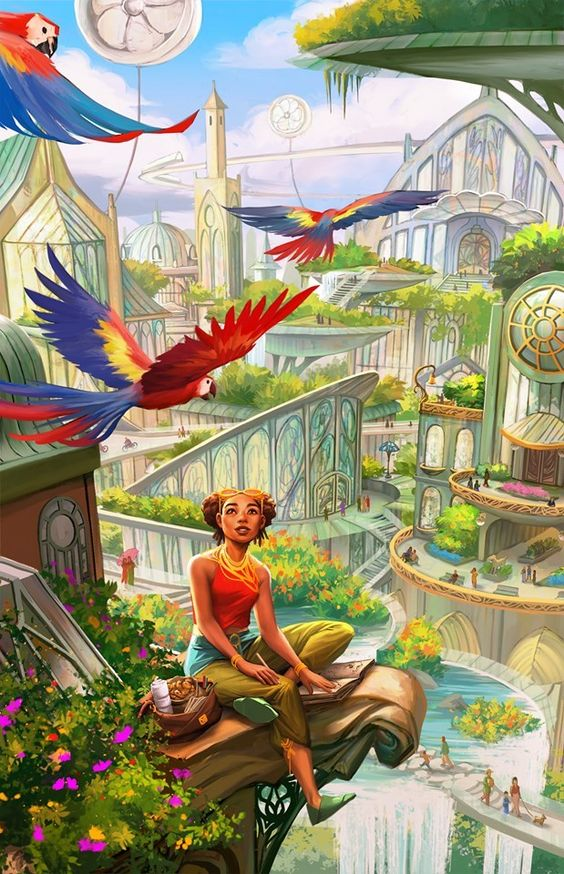
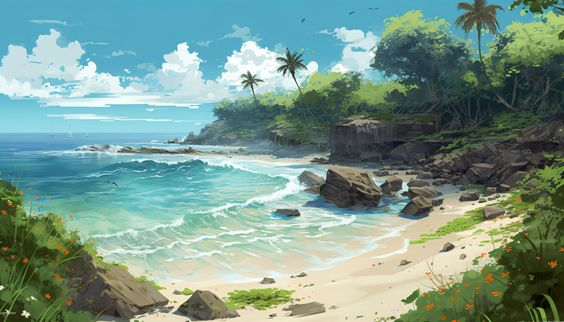
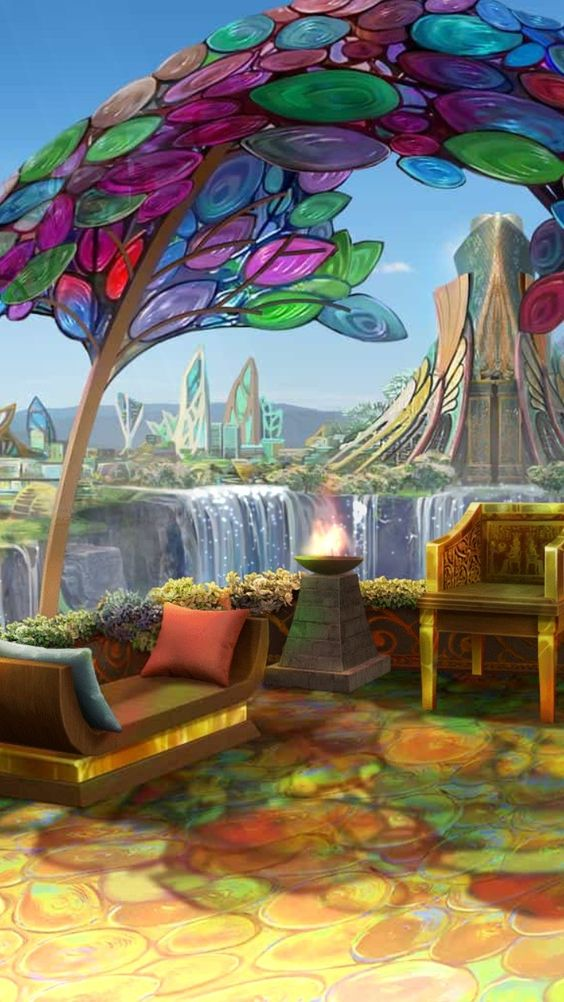
The Grand Kieves is a tropical island chain of unrivaled natural beauty and crystal clear waters. Their soft, white sand beaches are frequently dotted with sea glass and seashells. Inland, the lush landscape has largely been terraformed into solar powered terrariums and greenhouses designed to produce all manner of rare and exotic plant life, especially spell components. The largest of these greenhouses is the Kaainga Nursery, which also serves as the largest Maymuna shrine in the world.
The main island in the north, Siusesau, is untouched by this industry and is primarily designed for tourists to experience the untapped natural beauty of The Grand Kieves. Here, the most popular sites include Tiretiera, a scenic overlook at the top of the tallest mountain, and Tuhinga o Mua, the garden of life.
In the north there are also small clusters of resort islands that exclusively cater to entertaining outsiders. Here, tourists spend their days lounging in aquatic hammocks, sipping ice-cold cocktails filled with exotic fruits, eating decadent meals prepared with rare herbs and spices, enjoying massages with enchanted oils and hot stones, listening to soft, calming music, bathing in the sun, and completely forgetting that the rest of the world has a Darkspawn crisis on their hands. In this lush paradise, the problems of the continent melt away faster than the coconut ice cream.
The same cannot be said of the islands in the south. Here, in the hottest parts of the tropics, local laborers toil away in specialty islands designed to produce specific goods and services. For instance, the island of Tabumari specializes in coconut products, the island of Naurisa only produces sugar, and the island of Manritari is responsible for producing power to the rest of the Grand Kieves. Work in the Grand Kieves is a constant, and laborers are often expected to work long shifts in unforgiving conditions. In exchange, they want for very little, as the Kievian government provides food, shelter and job training for all of its people… but they are also paid very little. In some cases, they are not paid at all; slave labor is unfortunately a common, but not accepted, part of life in the Grand Kieves.
Geography
| File | Category | Description |
|---|
Settlements
| File | Description |
|---|
Appearance
Kievic people cope with the intense tropical heat by wearing loose, light, sheer fabrics that are held in place with decorative clasps, bands of braiding, and seashell ornamentation. The most popular colors are in earthen tones, especially shades of gold, green, and blue.
For the upper class, their bodies are usually lightly covered from the sun, either with frothy floor-length silk gowns and shawls or with draped linen tops and wide-legged pants long enough to pool on the floor. Metalwork jewelry in organic shapes are quite popular, especially ear cuffs, waist chains, and anklets. Sea glass accessories are expensive and coveted.
For the working class and for slaves, it is more common for their bodies to be exposed to the sun. They usually wear opaque fabrics that cover less of their bodies, preferring shorts, tank tops, or cropped tops over the floating floor-length garments of their superiors.
Military & Diplomacy
As home to the goddess of family, community, and peace, the Grand Kieves have never put an emphasis on military conquest. They have had especially close allies with certain Seithrani mages and Riojan dukes over the years, and make great efforts to welcome their esteemed guests into the lap of luxury. The Grand Kieves is a popular host for diplomatic summits and exchanges, and have been the site for negotiating many important peace treaties over the generations. Equally, they have served as a retreat for diplomats wherein no meaningful work is accomplishes and instead a great deal of rum is consumed on the beaches.
The islands are surrounded by extremely powerful barriers that have deterred threats of Darkspawn and invaders alike... and also seem to be just as effective at keeping people in as they are at keeping others out. Most of the world is fully aware that The Grand Kieves is a major player in the global slave trade, but so far no nation has been willing to jeopardize their peaceful relations with this diplomatic powerhouse to put an end to it. Gath has come the closest to publicly denouncing them for this practice, which many have found quite ironic considering the “mage prisons” that Gath is famous for running.
Magic & Faith
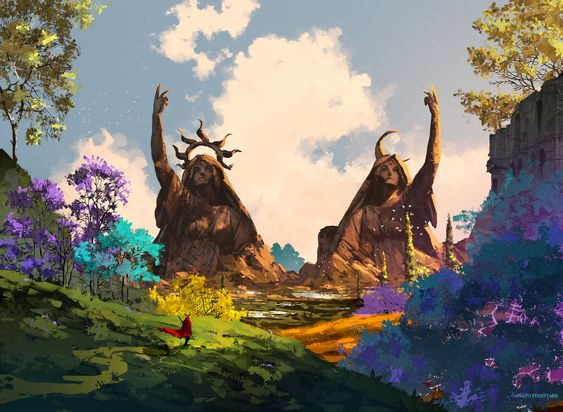
Despite the regular access to rare arcane spell components, The Grand Kieves does not have any arcane academies or significant sites of Mana research. They focus entirely on divine magic and channel their faith towards their patron goddess, Maymuna. It is said that all of the islands protected by her divine domain are within the All-Mother’s embrace, and this is what keeps them safe from the dark Corruption that plagues the continent. The barriers she maintains around the Grand Kieves are sometimes referred to as “Mirumiru”.
Education & Technology
Citizens of The Grand Kieves are more likely than most to be illiterate, since their access to texts and their educational opportunities are extremely limited. Though not forbidden, reading is not encouraged in the Grand Kieves and only texts of a divine nature are readily available to the general public; it is illegal to import any other literature. There is a black market book exchange among locals who have successfully smuggled in books from the “outside”, but participating in this exchange is extremely risky and members have been known to be accused of treason and disappear suddenly without a trace. There is a small thieves guild that call themselves The Book Club that specialize in this trade, usually by stealing reading materials from unsuspecting tourists.
The most well-educated population in the Grand Kieves are clerics and priests, though even their curriculum is rather limited. Clerics frequently work as scribes, letter carriers, and orators, and are responsible for transmitting news from the continent to the general public and vice versa.
That said, the population most in touch with the world outside Mirumiru are the bartenders and housekeepers that work on the islands frequented by tourists. These positions are highly coveted, since not only do they often get generous tips but they sometimes are gifted things that are even more valuable than the tourists may realize— books, silks, musical instruments, information. Perhaps the most valuable of all, some in these positions have managed to pick up small snippets of other Languages. Since foreign Languages are never taught in the Grand Kieves, these opportunities can open up tremendous opportunities for those in the position to take advantage of them.
Family Life
Kievians are extremely community-minded and collectivist in their approach towards life. The success of one is always seen as the success of the group— and, likewise, the failure of one is the failure of the group. Kievians are under a tremendous amount of pressure to follow the rules and not step out of line, because if they are found guilty of a crime they are likely to condemn their loved ones to a shared punishment.
For the locals of the Grand Kieves, slavery is a known but not accepted part of daily life. They believe that those who end up working as slaves do so to repay society— some kind of punishment for a usually unnamed crime. Slaves most commonly work in the gardens and coconut groves, though a rare few may be trusted to work on the tourist islands. They are never assigned to work that requires communication, for they are expected to be seen and not heard, and are forbidden from talking to commoners unless commanded otherwise. They are, however, allowed to pray, which some slaves have manipulated into code to transmit messages to and from one another. Locals assume that there must be a point in time where a slave has been determined to have worked off their societal debt and allowed back into the folds of the community, but the details of this process are only known to Maymuna.
Naming Conventions
Names in the Grand Kieves are inspired primarily by Maori names with some Hawaiian influence. Their personal names are often quite short, but it is common for Kievans to have a ceremonial name bestowed upon them by clerics of Maymuna. These names are often incredibly melodic, and can be very long.
Personal names: Eti, Rua, Oraora, Ungu, Urepo, Nahi, Piki, Waiara, Kea, Kiki, Tua, Maiope, Tupai, Ruru, Keka, Ihanga, Rakina, Ramarie, Ha-Amu
Ceremonial names: Huali, Makanakaika, Mika’ele, Ahuahu, A’alona, Alana, Milana, Haoa, Iakona, Kapahu, Kaiona, Leilani, Keana, Kaimalolo, Hoa kua, Kamakana
Family names: Rakena, Taimana, Paraone, Wirihana, Kerehoma, Munu, Wihone, Munu, Raharuhi, Kerehoma, Ropata, Hamuera, Wati, Keretene
Local NPC Compendium
· Kamea Kalili, chief hospitality officer
· Waraki Wikiriwhi, head guard of Maymuna’s temple
· Hinano Leilani, concierge
· Timonti Keeti, ferryman
· Apikai Nalanie, ferryman
· Nako Arepata, seaglass artist
· Marika Tereiti, spa owner
· Kea Aulani, chief of Makauleleka
· Nikolao Akamu, bartender
| File | Faction | Description |
|---|
Additional Details
Placeholder
Story Notes
Placeholder